

The Classic Egg Riddle Demystified
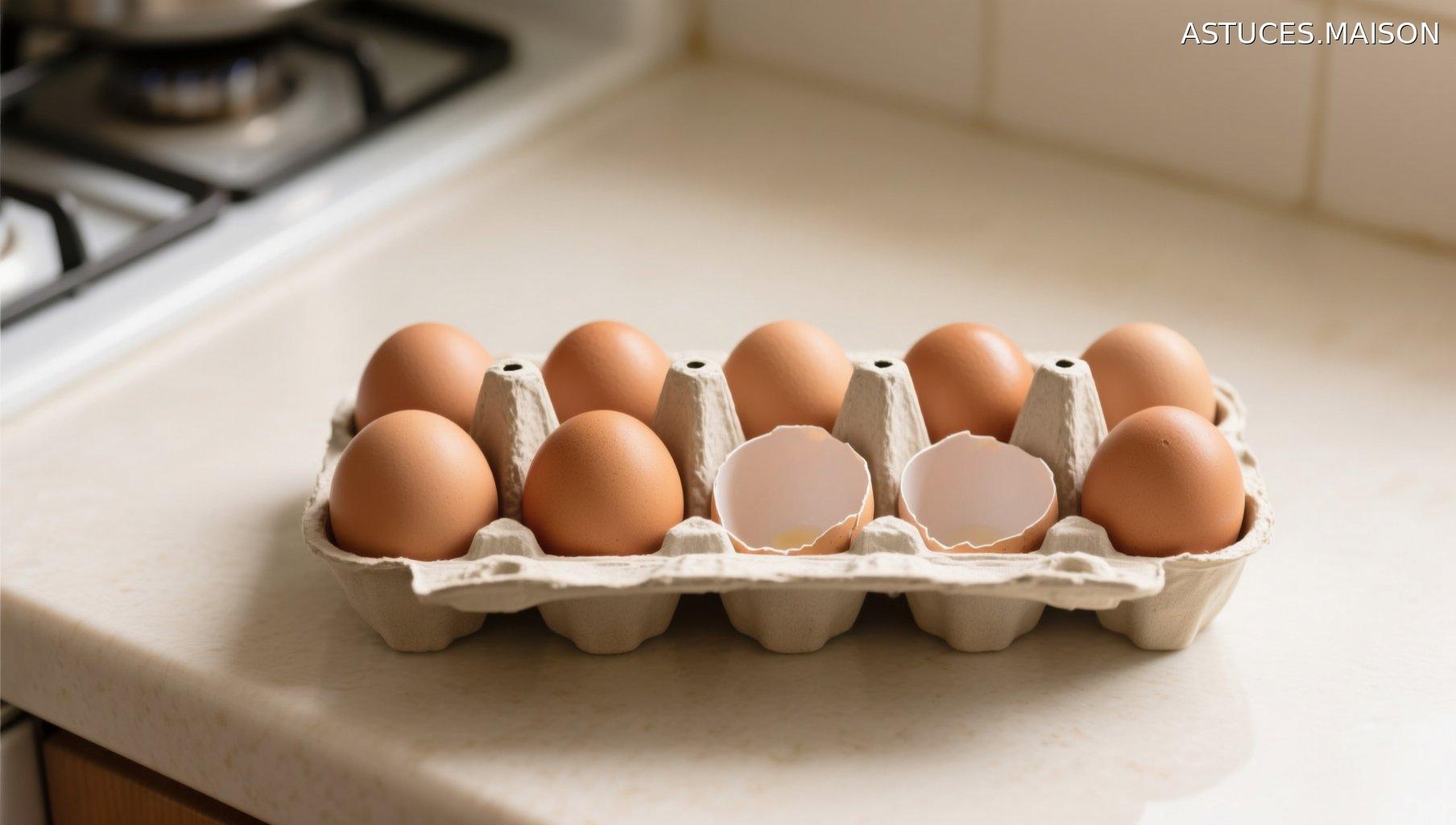
This seemingly simple puzzle has stumped countless people, yet the answer lies in careful reading rather than complex calculations. The riddle presents a straightforward scenario: you start with 6 eggs, then break 2, cook 2, and eat 2. The question asks how many eggs remain.
The correct answer is 4 eggs left. The key insight that most people miss is understanding that these aren’t three separate actions involving different eggs. Instead, you perform all three actions on the same 2 eggs. You break 2 eggs, then cook those same 2 broken eggs, then eat those same 2 cooked eggs.
Many people fall into the trap of treating this as a subtraction problem: 6 – 2 – 2 – 2 = 0. This common misconception occurs because our brains automatically interpret the three actions as separate events involving different eggs, leading to an overcomplicated calculation.
The puzzle actually tests sequential process understanding. When you break eggs for cooking, you don’t create additional broken eggs separate from the ones you’re preparing. The breaking, cooking, and eating represent stages of preparing the same eggs, not independent actions on different eggs.
This deceptively simple riddle reveals how easily our minds can overcomplicate straightforward problems when we don’t read carefully enough or make assumptions about the scenario presented.

The Psychology Of Logical Reasoning Errors
This widespread miscalculation reveals fascinating insights into how our brains process information under pressure. When faced with the egg riddle, most people instinctively default to mathematical operations rather than scenario comprehension, treating each action as requiring separate eggs.
Cognitive psychologists identify this as a classic example of “cognitive overload” – when our working memory becomes overwhelmed by multiple pieces of information. The brain attempts to simplify by creating distinct categories: broken eggs, cooked eggs, eaten eggs. This mental compartmentalization leads to the erroneous 6-2-2-2=0 calculation.
The error also stems from pattern recognition bias. Most mathematical word problems we encounter in school involve multiple operations with different quantities. Our brains automatically apply this familiar framework, even when inappropriate for the scenario.
Reading comprehension plays a crucial role here. The riddle deliberately uses the conjunction “and” rather than listing separate sentences: “you broke 2 and you cooked and eat it.” This grammatical structure signals that we’re following the same eggs through multiple stages, not performing operations on different sets.
Interestingly, children often solve this riddle faster than adults because their minds haven’t yet developed the mathematical processing shortcuts that can mislead us. They visualize the actual scenario more literally, following the eggs’ journey from whole to broken to cooked to eaten, naturally arriving at the correct answer.

Cognitive Benefits Of Brain Teaser Puzzles
This natural problem-solving ability that children demonstrate highlights the profound cognitive benefits of engaging regularly with brain teasers and logical puzzles. Research consistently shows that these mental exercises create measurable improvements in multiple areas of brain function.
A landmark University of Michigan study revealed that individuals who engaged with puzzles for just 25 minutes daily experienced IQ increases of up to 4 points within weeks. This improvement stems from enhanced neural plasticity – the brain’s ability to form new connections and strengthen existing pathways.
Brain teasers like the egg riddle specifically target working memory, the cognitive system responsible for temporarily holding and manipulating information. Regular practice with these challenges increases working memory capacity, leading to better performance in academic and professional tasks requiring concentration and analytical thinking.
The neurochemical rewards are equally impressive. Successfully solving puzzles triggers dopamine release, the same neurotransmitter associated with eating chocolate or listening to music. This natural reward system not only boosts mood but also reinforces the desire to continue challenging mental activities.
Visual-spatial reasoning receives particular benefit from riddles requiring scenario visualization. Brain imaging studies show increased activity in the prefrontal cortex and parietal regions during puzzle-solving, areas crucial for pattern recognition and strategic planning. These cognitive gains transfer to real-world situations, improving decision-making abilities and creative problem-solving approaches across various life contexts.

Why Simple Riddles Remain Powerfully Engaging
This dopamine-driven satisfaction explains why simple riddles like the egg puzzle maintain such enduring popularity across generations. Unlike complex mathematical problems that intimidate many people, basic brain teasers offer universal accessibility regardless of educational background or age.
The immediate gratification factor proves particularly compelling in our fast-paced digital world. Within seconds, anyone can experience the “aha moment” that delivers genuine accomplishment without requiring specialized knowledge or extensive time investment. This instant reward system makes riddles perfect for social media sharing, where quick engagement drives viral content.
Research indicates that brain teasers provide stress relief equivalent to meditation while simultaneously improving attention and focus. The concentrated mental effort required to solve puzzles creates a natural state of mindfulness, temporarily blocking out daily worries and anxieties.
Educational value remains paramount for parents and teachers seeking engaging learning tools. Simple riddles develop analytical thinking without feeling like formal instruction, making them ideal for classroom activities and family entertainment. Children who regularly encounter logic puzzles show improved reading comprehension and mathematical reasoning skills.
The social bonding aspect cannot be overlooked either. Families and friends often gather around challenging riddles, creating shared experiences and friendly competition. These interactions strengthen relationships while exercising cognitive abilities, demonstrating how entertainment and education can seamlessly combine in our increasingly screen-dominated culture.
Continue Reading →