
The Viral Revelation Behind Flight Crew’s Hidden Safety Protocol
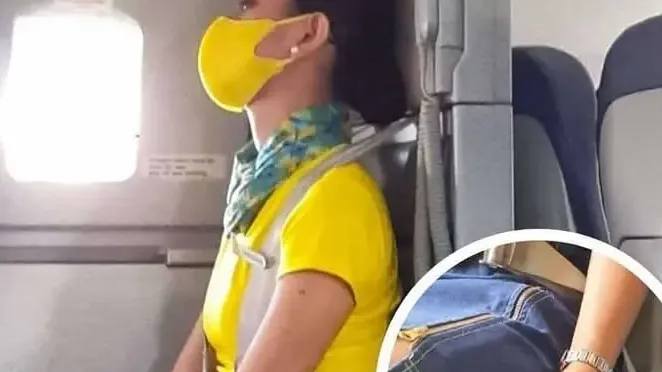
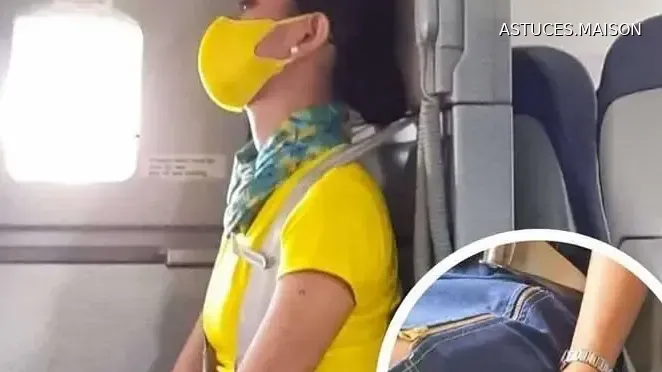
Passengers have long noticed a peculiar ritual during takeoff and landing: flight attendants buckle into their jump seats and mysteriously place their hands beneath their thighs. This seemingly odd behavior remained unexplained until Henny Lim, a flight attendant with Philippines-based Cebu Pacific, decided to lift the veil on this industry secret.
Taking to TikTok, Lim shared the fascinating truth behind what passengers witness but rarely understand. The behavior isn’t random or comfortable positioning—it’s a critical safety protocol known as the “bracing position,” executed with precision during every flight’s most vulnerable moments.
« This position involves fastening seatbelts securely, sitting upright, sitting on hands – arms up, thumbs tucked – and arms loose, and feet flat on the floor, » Lim explained to her growing audience of curious travelers.
The revelation struck a chord with millions who had observed this mysterious crew behavior without knowing its significance. What appeared to be an uncomfortable seating arrangement actually represents decades of aviation safety evolution, carefully designed to protect those responsible for passenger welfare.
Lim’s candid explanation transformed a simple TikTok video into an educational moment, demonstrating how social media can bridge the gap between airline industry practices and public understanding. Her willingness to share professional insights opened passengers’ eyes to the calculated safety measures happening right before them during every flight.
The Precise Mechanics Of The Bracing Position
Beyond the basic understanding that crew members sit on their hands, the actual mechanics of this safety protocol reveal a carefully orchestrated sequence of precise movements. Each element of the bracing position serves a specific purpose, transforming what appears to be simple hand placement into a complex protective stance.
The process begins with secure seatbelt fastening, ensuring maximum restraint before the critical positioning begins. Flight attendants must maintain an upright posture, avoiding any relaxed or slouched positioning that could compromise the protocol’s effectiveness.
The distinctive hand placement follows exact specifications: « arms up, thumbs tucked – and arms loose, and feet flat on the floor, » as Lim detailed in her explanation. This isn’t merely sitting on hands, but rather positioning arms upward with thumbs carefully tucked inward while maintaining loose arm muscles to prevent tension-related injuries.
Foot positioning completes the stance, requiring crew members to place both feet firmly and flatly on the floor. This creates a stable base that works in conjunction with the upper body positioning to form a comprehensive protective barrier.
The seeming contradiction between having arms “up” while sitting on hands demonstrates the protocol’s complexity. Crew members must balance multiple positioning requirements simultaneously, creating a stance that protects against impact while maintaining readiness for immediate action.
This intricate choreography transforms each takeoff and landing into a precisely executed safety performance, invisible to passengers yet critical for crew protection.
The Life-Saving Science Behind The Safety Protocol
While passengers observe this ritual from their seats, the true power of the bracing position lies in its scientifically-proven injury prevention capabilities. The careful positioning serves a dual protective function that extends far beyond simple restraint.
« This keeps body movement restricted so that there is less chance of injury if there was an impact, » Lim explained, highlighting the position’s primary defensive mechanism. By limiting bodily motion during critical flight phases, the protocol creates a protective shell around each crew member, reducing the potential for traumatic injuries during unexpected turbulence or emergency situations.
The positioning simultaneously enables crew members to conduct what aviation professionals call the « silent review » – a mental preparation process that occurs during every takeoff and landing. This cognitive safety protocol ensures flight attendants remain mentally prepared for emergency response while physically protected.
« This includes being aware of emergency equipment in the location, door operation, commands given & any visual clues outside of the aircraft, » as Lim detailed. Crew members use these moments to mentally rehearse evacuation procedures, identify potential hazards, and prepare for immediate action if circumstances require emergency response.
The Federal Aviation Administration has formally recognized this practice through official documentation. According to an FAA memo, the bracing position serves two distinct purposes: « reducing flailing and reducing secondary impact. » This governmental endorsement transforms what might appear as simple procedure into federally-backed safety science, validating the protocol’s life-saving potential.
Flight Attendants As Social Media Safety Educators
This scientific validation has inspired a growing movement of aviation professionals who leverage social media platforms to share their insider knowledge with passengers worldwide. Henny Lim’s TikTok revelation represents just one example of how flight attendants are transforming into digital educators, bridging the gap between professional aviation expertise and public understanding.
Esther Sturrus exemplifies this trend, having built a substantial following of 223,800 people eager to learn from her professional insights. Through her content, she shares essential passenger etiquette guidelines, explaining that the best travelers are « polite and friendly » and « courteous and engage in friendly conversation. » Her educational approach extends beyond safety protocols to encompass practical travel wisdom.
Sturrus’s content diversity demonstrates how flight attendants address multiple aspects of air travel. In addition to behavior guidelines, she provides practical solutions like techniques for keeping clothes fresh and smelling good during extended journeys – knowledge that comes directly from years of professional travel experience.
This digital education movement serves a crucial function in modern aviation. As passengers become increasingly curious about airline operations, crew members actively work to improve passenger awareness through accessible, engaging content. These social media initiatives help demystify aviation procedures, reduce passenger anxiety, and promote better collaboration between crew and travelers.
The trend transforms flight attendants from silent service providers into visible experts, sharing professional knowledge that enhances both safety understanding and overall travel experiences for millions of social media users seeking insider aviation insights.
Continue Reading →