
Trump’s Shocking Statement On Police Powers
During a press conference on August 11th, President Donald Trump delivered a controversial declaration that has sent shockwaves through the law enforcement community and civil rights advocates alike. Speaking at the White House, Trump announced his decision to place Washington DC’s police force under federal control, accompanied by a stunning statement about their newfound authority.
« They love to spit in the face of the police… But now they are allowed to do whatever the hell they want, » Trump declared, his words captured by multiple news outlets and fact-checkers who have since verified the explosive quote. The President’s remarks came as he justified his unprecedented federal takeover of the Metropolitan Police Department.
Trump elaborated on his reasoning, claiming that local officers had been previously restrained from taking action. « The police are standing and they’re told, ‘Don’t do anything under any circumstances,’ and you can see they want to get at it. And they’re standing there and people are spitting in their face, and they’re not allowed to do anything, » he explained during the televised announcement.
The timing of this declaration coincided with Trump’s proclamation of a crime emergency in the nation’s capital, setting the stage for what he described as necessary federal intervention. His choice of words – particularly the phrase about police doing « whatever the hell they want » – has drawn immediate scrutiny from constitutional scholars and political observers who question the implications of such unrestricted authority.
Federal Takeover Of Washington DC Police
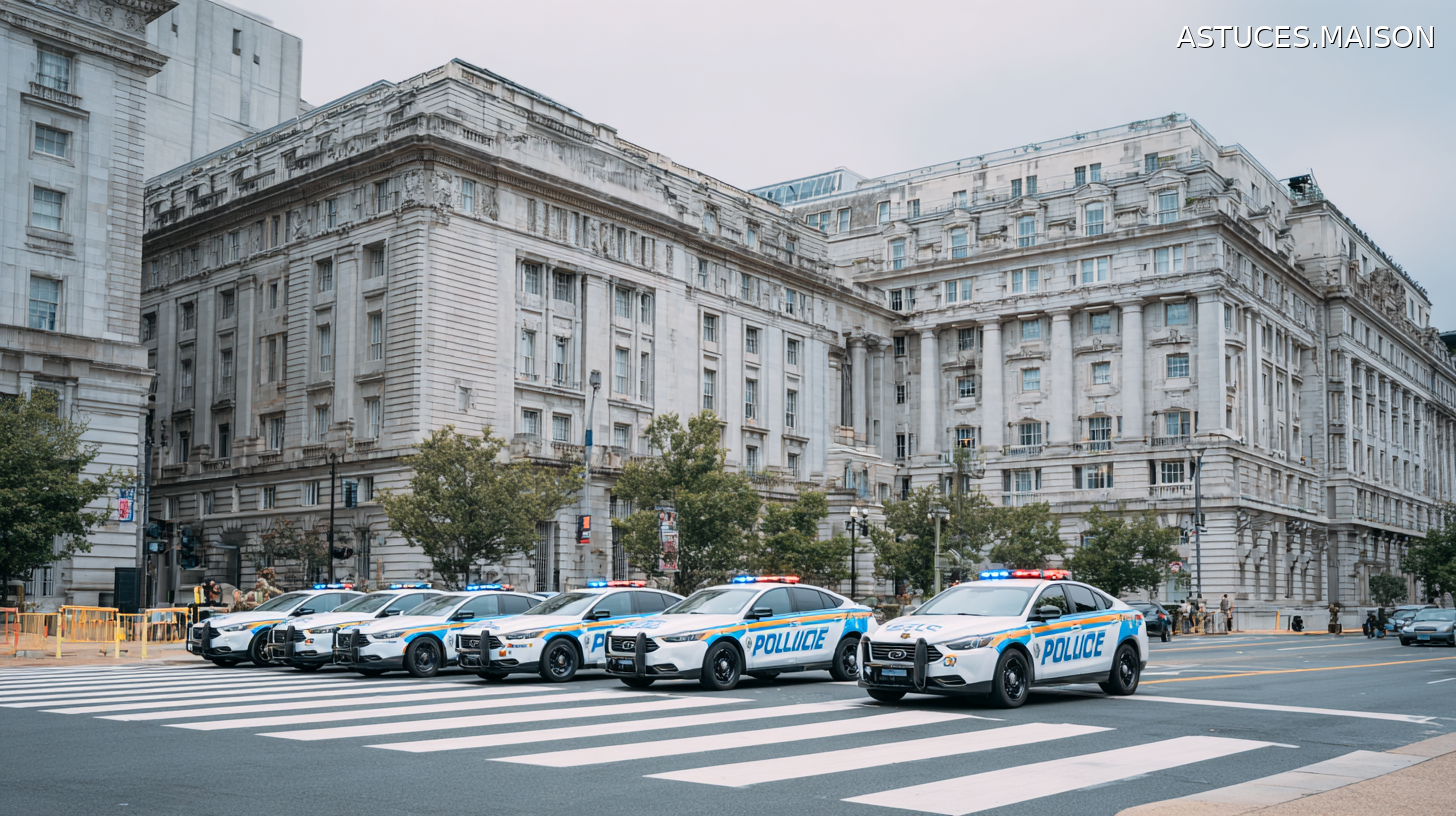
This sweeping declaration of emergency powers has triggered the most comprehensive federal intervention in local law enforcement in recent memory. Within hours of Trump’s announcement, 800 National Guard troops were deployed throughout the nation’s capital, marking a dramatic escalation in federal presence on Washington’s streets.
The scope of the takeover extends far beyond symbolic gestures. All 3,400 officers of the Metropolitan Police Department now operate under direct federal command, with DEA Administrator Terry Cole appointed to lead the newly federalized force. This unprecedented move strips local authority from Mayor Muriel Bowser and places the entire police apparatus under Trump’s executive control.
The operational transformation has been swift and comprehensive. Federal protocols now govern everything from patrol assignments to arrest procedures, effectively dissolving the traditional separation between federal and municipal law enforcement. Cole’s appointment signals Trump’s intent to treat Washington DC as a federal district requiring direct oversight rather than a self-governing municipality.
« This is about restoring order and giving our brave officers the tools they need, » Trump explained during the press conference, framing the federal takeover as necessary support for overwhelmed local forces. The President cited what he described as rampant violent crime as justification for invoking emergency powers typically reserved for natural disasters or wartime situations.
The scale of this intervention represents a fundamental shift in federal-local relations, concentrating unprecedented police authority under direct presidential command while eliminating traditional checks on federal law enforcement power.
Contradictory Crime Statistics And Justification
Trump’s characterization of Washington DC as plagued by rampant violent crime stands in sharp contrast to official data. The capital is currently experiencing its lowest violent crime rates in 30 years, according to the Department of Justice, with total violent crime down 35% from 2023 levels.
The statistical evidence directly contradicts Trump’s emergency declaration. Homicides decreased by 32%, robberies fell 39%, and armed carjackings dropped 53% throughout 2024. This downward trend has continued into 2025, with violent crime down an additional 26% compared to the same period last year.
Mayor Muriel Bowser categorically rejected Trump’s assessment, stating that « we had a terrible spike in crime in 2023, but this is not 2023, this is 2025. » She credited the improvements to collaborative efforts between community leaders, police, prosecutors, and existing federal partnerships—precisely the type of cooperation Trump’s takeover has now eliminated.
The timing of the federal intervention appears particularly questionable given these improvements. Crime statistics show Washington DC has been steadily recovering from a brief spike in 2023, making the declaration of a crime emergency seem disconnected from actual public safety trends.
This disconnect between Trump’s justification and measurable crime data raises questions about the true motivations behind the unprecedented federal intervention. The decision to invoke emergency powers during a period of historic crime reduction suggests factors beyond public safety may be driving this extraordinary assertion of federal authority over the nation’s capital.

Political And Constitutional Implications
This disconnect between Trump’s stated justifications and actual crime data has prompted legal experts to question the true motivations behind the federal intervention. Constitutional scholars have characterized the takeover as « a textbook authoritarian maneuver » that fundamentally undermines democratic governance in the nation’s capital.
D.C. Attorney General Brian Schwalb emphasized that « this is totally unprecedented in the history of our city. It’s never been the case that a president has tried to invoke this limited power. » University of North Carolina law professor Michael Gerhardt warned that Trump’s approach « strikes me as precisely what the framers did not want. »
The broader constitutional implications extend far beyond Washington. Congressman Jonathan Jackson described it as « a dangerous and authoritarian precedent » that threatens « the foundational principles of democracy and self-governance. » Legal experts warn that if the federal government can fabricate emergencies to override local authority in DC, it establishes a framework for similar interventions nationwide.
Perhaps most concerning to constitutional scholars is the militarization of civilian law enforcement. Critics note that using military forces in policing roles follows patterns familiar from authoritarian regimes, where deploying troops in capital cities typically marks an early step toward consolidating executive power.
Representative Jamie Raskin announced plans to introduce legislation reversing Trump’s action, arguing the federal takeover « has nothing to do with fighting crime » and represents an unprecedented expansion of presidential authority at the expense of local democratic institutions.
Continue Reading →