
The Alarming Drop In Blue Whale Songs
For decades, the deep, resonant songs of blue whales have echoed through the world’s oceans, serving as the defining soundtrack of marine life. These magnificent creatures, the largest animals ever to inhabit Earth, use their complex vocalizations to communicate across vast distances, their calls traveling hundreds of miles through the depths.
However, a disturbing silence is now spreading across our seas. Scientists at the Monterey Bay Aquarium Research Institute have documented a shocking revelation: blue whale songs have plummeted by nearly 40 percent over just six years. This dramatic decline represents more than a statistical anomaly—it signals a profound disruption in one of nature’s most ancient communication systems.
The research team’s findings paint a troubling picture of behavioral changes in these endangered giants. Where once their haunting melodies provided a constant acoustic backdrop to ocean life, vast stretches of sea now fall unnaturally quiet. The implications extend far beyond the whales themselves, as their songs serve as vital indicators of marine ecosystem health.
This unprecedented silence among Earth’s largest mammals has sparked urgent concerns within the scientific community. As researchers delve deeper into the causes behind this acoustic disappearance, they’re uncovering connections to broader environmental catastrophes that threaten not only blue whale populations, but the delicate balance of entire ocean ecosystems.
The questions now facing scientists are as vast as the oceans themselves: what forces could drive these ancient mariners to abandon their songs?
The Blob Marine Heatwave And Its Devastating Impact
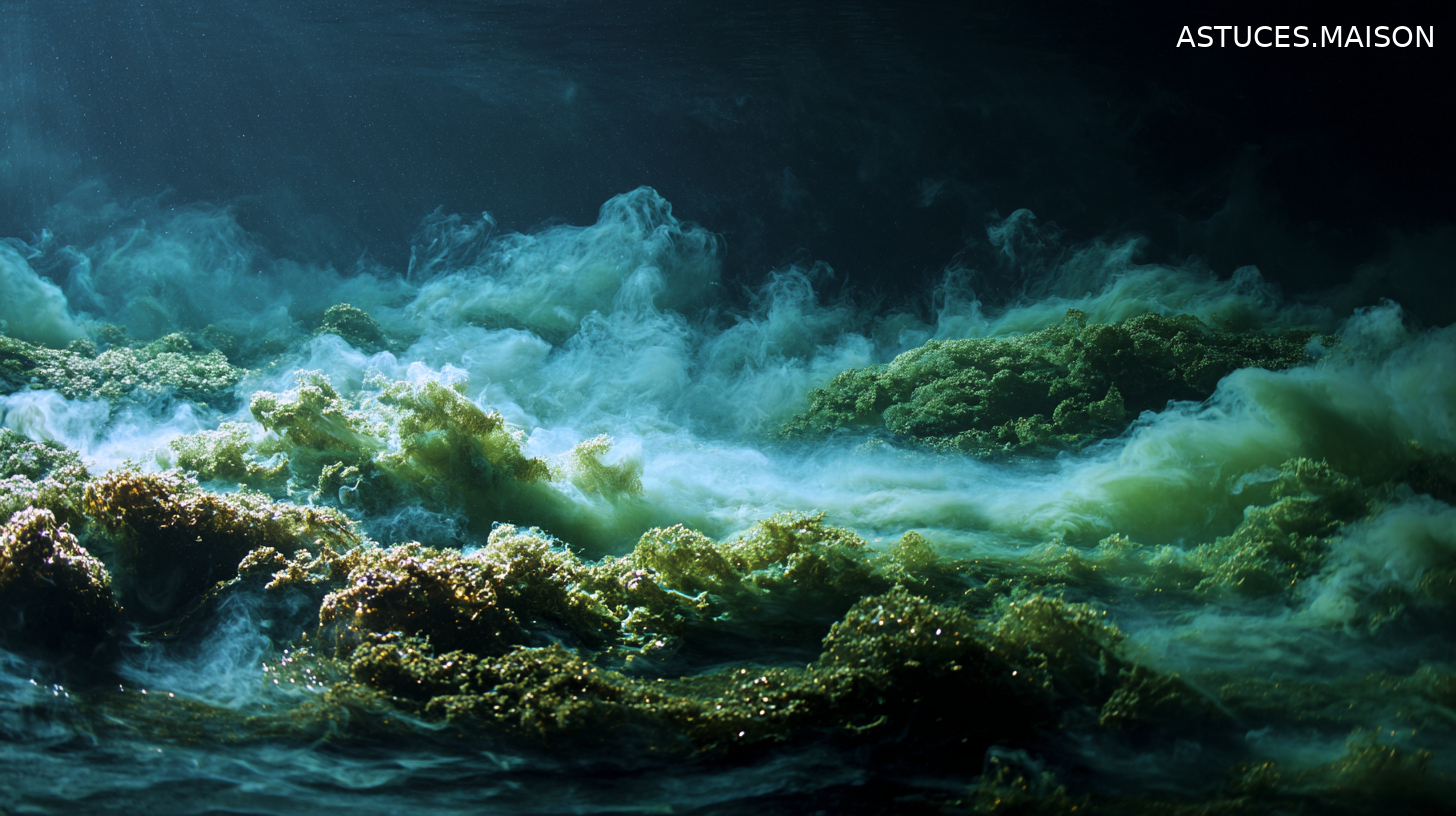
The answer to what silenced these ocean giants lies in a catastrophic environmental event known as The Blob—a marine heatwave that struck in 2013 with unprecedented ferocity. This massive warm water anomaly raised ocean temperatures by more than 4.5°F, fundamentally altering the chemistry of vast marine ecosystems along the Pacific coast.
John Ryan, a biological oceanographer at the Monterey Bay Aquarium Research Institute, describes the devastating consequences: « It caused the most widespread poisoning of marine mammals ever documented. These were hard times for whales. » The extreme temperatures triggered harmful chemical changes that allowed toxic algae to bloom across enormous areas of ocean, creating a poisonous environment for marine life.
The Blob’s impact extended far beyond temperature increases. The heatwave fundamentally disrupted the oceanic food web, causing a catastrophic collapse in krill and anchovy populations—the primary food sources that sustain blue whale communities. What had once been abundant feeding grounds transformed into barren underwater deserts.
Co-author and marine biologist Kelly Benoit-Bird emphasizes the systemic nature of the damage: « When we have these really hot years and marine heatwaves, it’s more than just temperature. The whole system changes, and we don’t get the krill. »
This environmental disaster created a perfect storm of starvation and toxicity that would forever alter blue whale behavior. With their very survival at stake, these magnificent creatures were forced to make an impossible choice between communication and the desperate search for sustenance.
Survival Crisis: When Giants Go Hungry
This impossible choice became a harsh reality as the collapsed krill and anchovy populations left blue whales in a permanent state of desperation. The toxic algae blooms that followed The Blob had decimated the very foundation of the marine food web, creating vast oceanic wastelands where abundant feeding grounds once thrived.
John Ryan paints a stark picture of their predicament: « When you really break it down, it’s like trying to sing while you’re starving. They were spending all their time just trying to find food. » The researcher’s analogy captures the fundamental shift in blue whale behavior—from social communication to pure survival mode.
The behavioral changes documented by scientists reveal the extreme stress these giants now endure. Ryan continues: « We don’t hear them singing. They’re spending all their energy searching. There’s just not enough time left over—and that tells us those years are incredibly stressful. »
This transformation represents more than a temporary adaptation. Blue whales, who have traversed the world’s oceans for millions of years, now find themselves caught in an exhausting cycle where every moment must be dedicated to finding sustenance. Their legendary songs—once the soundtrack of healthy ocean ecosystems—have been replaced by the silence of struggle.
The toxic algae blooms continue to disrupt the delicate marine food chain, creating a cascading effect that reaches from microscopic organisms to the planet’s largest animals. What emerges is a disturbing portrait of an ecosystem under siege, where even Earth’s mightiest creatures face an uncertain future in increasingly hostile waters.
Climate Change’s Broader Threat To Marine Ecosystems
This struggle extends far beyond individual whale populations, signaling a profound transformation in marine ecosystems worldwide. Marine biologist Kelly Benoit-Bird emphasizes the systemic nature of the crisis: « When we have these really hot years and marine heatwaves, it’s more than just temperature. The whole system changes, and we don’t get the krill. »
The collapse affecting blue whales serves as a canary in the coal mine for ocean health. These marine giants, capable of traversing entire coastlines, now face food scarcity across vast geographic ranges—a scale that reveals the true magnitude of ecosystem disruption.
Benoit-Bird’s research underscores the cascading effects: « So the animals that rely only on krill are kind of out of luck. There are whole ecosystem consequences of these marine heat waves. If they can’t find food, and they can traverse the entire West Coast of North America, that is a really large-scale consequence. »
As marine heatwaves become increasingly frequent and severe, the blue whale’s plight foreshadows a darker reality for countless marine species. Scientists warn that accelerating climate change threatens to devastate ocean ecosystems entirely, with even slight temperature changes potentially causing catastrophic damage to millions of organisms.
The silence of blue whales thus becomes more than a behavioral shift—it represents an urgent warning about the fundamental instability of marine ecosystems. Their struggle to survive in warming waters offers humanity a stark preview of the environmental challenges that lie ahead.
Continue Reading →